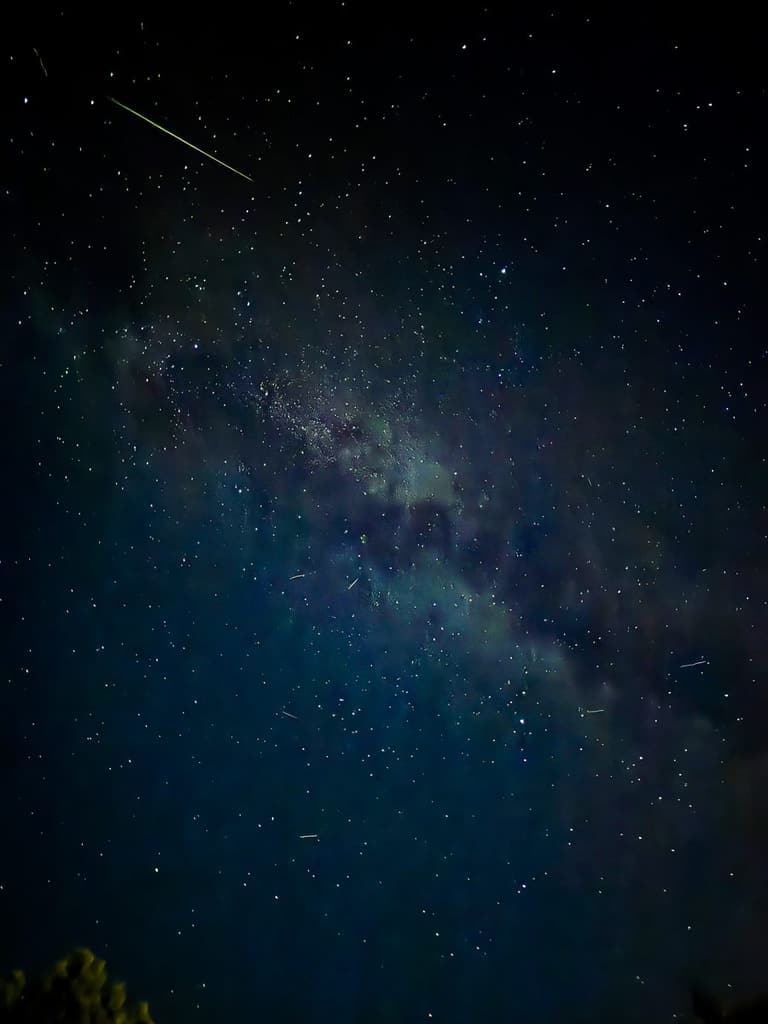
Peak December 13–14, 2026 · waxing crescent (~24% lit), minimal interference · up to ~150/hr · slow (35 km/s) · radiant in Gemini.
The Geminids are the most prolific and reliable meteor shower of the year: slow, bright, often colourful meteors that can top 100 an hour from a dark sky. Unusually, they come not from a comet but from the rock-comet 3200 Phaethon. And 2026 is a good year — the peak night carries only a thin, early-setting crescent Moon, so the prime after-midnight hours stay dark.
When it peaks in 2026 — and the Moon
The Geminids peak in 2026 falls on the night of December 13–14, 2026. That night the Moon is a waxing crescent, around 24% lit — a thin waxing crescent that sets in the early evening, leaving the sky dark all night — so moonlight interference is minimal. As every year, the Geminids are best in the dark hours after midnight, when the radiant climbs high and the meteor rate builds toward dawn.
Where to look
The meteors radiate from Gemini, near the bright star Castor. The Geminid radiant clears the horizon by mid-evening — earlier than most showers — so you can start watching well before midnight, though rates keep climbing until the radiant is highest around 2 a.m. Don't stare at the radiant itself; face a wide, dark patch of sky.
What to expect
Under a genuinely dark sky the Geminids can deliver up to ~150 meteors an hour at the peak. From a typical suburban backyard, expect more like 30–75 an hour near maximum. They're on the slow side (35 km/s) and tend to be bright, with a good fraction showing yellow or green — one of the most rewarding showers to simply lie back and watch.
What to bring
The Geminids are a naked-eye event — comfort matters more than optics.
- A reclining or zero-gravity chair — you'll be looking up for a while
- A red-light headlamp — preserves your night vision
- Warm layers, a hat and a blanket — you cool off fast lying still
- A hot drink and patience — give your eyes 20+ minutes to adapt
Frequently asked
When do the Geminids peak in 2026?
The peak is the night of December 13–14, 2026, with the best rates in the dark hours after midnight into the early morning of the 14th. Activity stays strong for a night or two either side of the maximum.
Will the Moon spoil the 2026 Geminids?
No — this is a favourable year. Around the peak the Moon is a thin waxing crescent that sets in the early evening, so the sky is dark through the prime after-midnight hours when the Geminids are best.
Why are the Geminids so good?
They're the richest and most dependable shower of the year. Their parent — the asteroid (or 'rock comet') 3200 Phaethon — lays down a dense, wide stream of relatively large, slow particles, which makes for lots of bright, easy-to-see meteors.
Do I need any equipment?
No. Meteors are a naked-eye event — binoculars and telescopes only narrow your view. Dress very warmly (this is December), get away from lights, let your eyes dark-adapt for 20 minutes, and look up.
Sources and review
- Meteor-shower timing and rates: IMO Meteor Shower Calendar — maxima are windows, not instants
- Cross-check on shower activity: American Meteor Society
- Moon phases and illumination: U.S. Naval Observatory
Last reviewed by the Stargazr editorial team. Astronomical forecasts and meteor maxima are revised as primary sources publish; we update this page when they do. Found an error? corrections@stargazr.io
The full Geminids guide · All meteor showers · Tonight's sky →