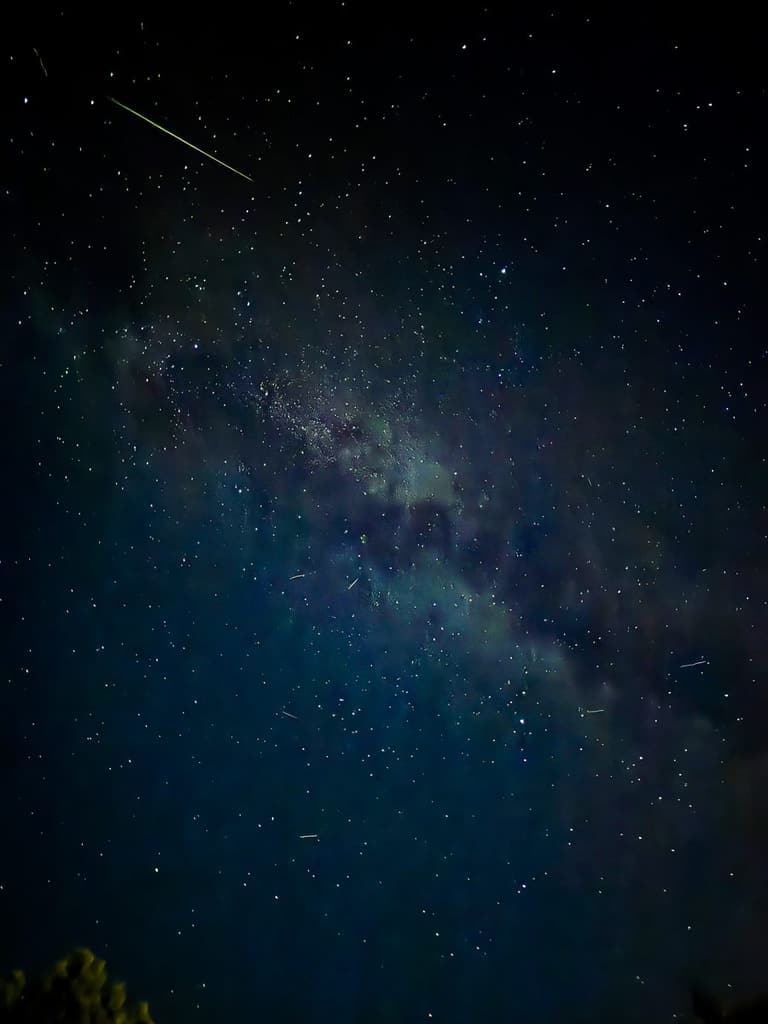
Peaks around December 14 each year · up to ~150/hr at its best · slow (35 km/s) · best from both hemispheres.
If you only watch one shower a year, make it the Geminids. They're the richest and most dependable of all the major showers, with an ideal peak rate near 150 meteors an hour — slow, bright, and often tinged with color. The catch is timing: they peak in cold mid-December nights.
When to watch
The Geminids are active in the first three weeks of December, peaking around December 14. Unusually, they get going early — the radiant is already well up by mid-evening, so you don't have to wait for the small hours, though rates still climb toward and after midnight.
Where to look
The meteors appear to come from the constellation Gemini, but they can appear all across the sky. As always, look at a wide, dark stretch of sky rather than straight at the radiant, and let your gaze drift.
What makes it special
The Geminids are odd: their parent isn't a comet but the rocky asteroid 3200 Phaethon. At a gentle 35 km/s the meteors are noticeably slower than most, which makes them long-lasting, bright, and frequently white, yellow, or green. The ~150-per-hour rate is the dark-sky ideal.
How to watch
Leave the telescope inside — wide-open eyes see far more meteors than any lens. December nights are cold, so dress for longer than you think you'll last, give your eyes 20 minutes to adapt, and find the darkest spot you can reach.
Frequently asked
When do the Geminids peak?
Around December 14 each year, active from roughly December 4 to December 20. They're one of the few showers worth watching in the evening as well as after midnight.
How many Geminids will I really see?
Up to about 150 an hour is the ideal rate under a dark sky with the radiant overhead — the highest of any annual shower. From a typical backyard you'll see fewer, but the Geminids are reliable enough that even light-polluted skies usually deliver a steady show.
What causes the Geminids?
Debris from asteroid 3200 Phaethon, not a comet — which makes this shower a bit of a mystery, since asteroids don't usually shed material the way comets do. Earth runs through that debris every December.
Other meteor showers
Quadrantids · Lyrids · Eta Aquariids · Southern Delta Aquariids · Perseids · Orionids · Leonids · Ursids