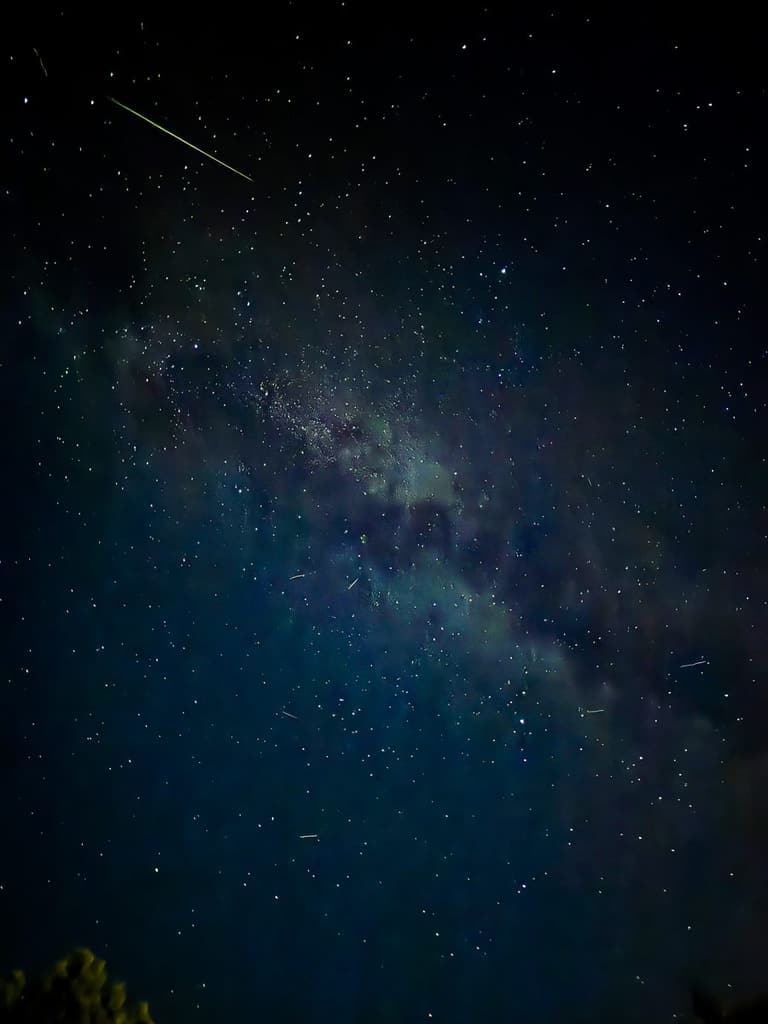
Peak December 21–22, 2026 · waxing gibbous (~96% lit), strong interference · up to ~10/hr · slow (33 km/s) · radiant in Ursa Minor.
The Ursids are the year's final shower, a modest display peaking around the December solstice, a week after the Geminids. Because the radiant sits by the north celestial pole it never sets for northern observers, so the Ursids are up all night from the northern hemisphere. Rates are low at the best of times, and 2026 adds a bright gibbous Moon — so this is one for the dedicated.
When it peaks in 2026 — and the Moon
The Ursids peak in 2026 falls on the night of December 21–22, 2026. That night the Moon is a waxing gibbous, around 96% lit — a bright near-full Moon that stays up for much of the night — so moonlight interference is strong. As every year, the Ursids are best in the dark hours after midnight, when the radiant climbs high and the meteor rate builds toward dawn.
Where to look
The radiant lies in Ursa Minor, near the bowl of the Little Dipper — circumpolar from mid-northern latitudes, so it's above the horizon all night. This is strictly a northern-hemisphere shower; face north.
What to expect
Only about 10 meteors an hour at best, occasionally with a brief outburst. The Ursids are slow (33 km/s), and with a bright Moon up much of the night in 2026 you'll want low expectations — think of it as a peaceful solstice coda to the meteor year rather than a main event.
What to bring
The Ursids are a naked-eye event — comfort matters more than optics.
- A reclining or zero-gravity chair — you'll be looking up for a while
- A red-light headlamp — preserves your night vision
- Warm layers, a hat and a blanket — you cool off fast lying still
- A hot drink and patience — give your eyes 20+ minutes to adapt
Frequently asked
When do the Ursids peak in 2026?
Around the night of December 21–22, 2026, close to the winter solstice. It's a short, modest peak.
Will the Moon spoil the 2026 Ursids?
Largely, yes. A bright waxing gibbous Moon is up for much of the night around the peak, and against an already-sparse shower that leaves only the brighter meteors visible.
Can I see the Ursids from the southern hemisphere?
Essentially no — the radiant is right next to the north celestial pole, so it never rises for southern observers. This is a northern-hemisphere-only shower.
Why are there so few Ursids?
Earth only clips the edge of the debris stream from their parent comet, 8P/Tuttle, so the shower is naturally weak — though it has produced rare, brief outbursts.
Sources and review
- Meteor-shower timing and rates: IMO Meteor Shower Calendar — maxima are windows, not instants
- Cross-check on shower activity: American Meteor Society
- Moon phases and illumination: U.S. Naval Observatory
Last reviewed by the Stargazr editorial team. Astronomical forecasts and meteor maxima are revised as primary sources publish; we update this page when they do. Found an error? corrections@stargazr.io
The full Ursids guide · All meteor showers · Tonight's sky →