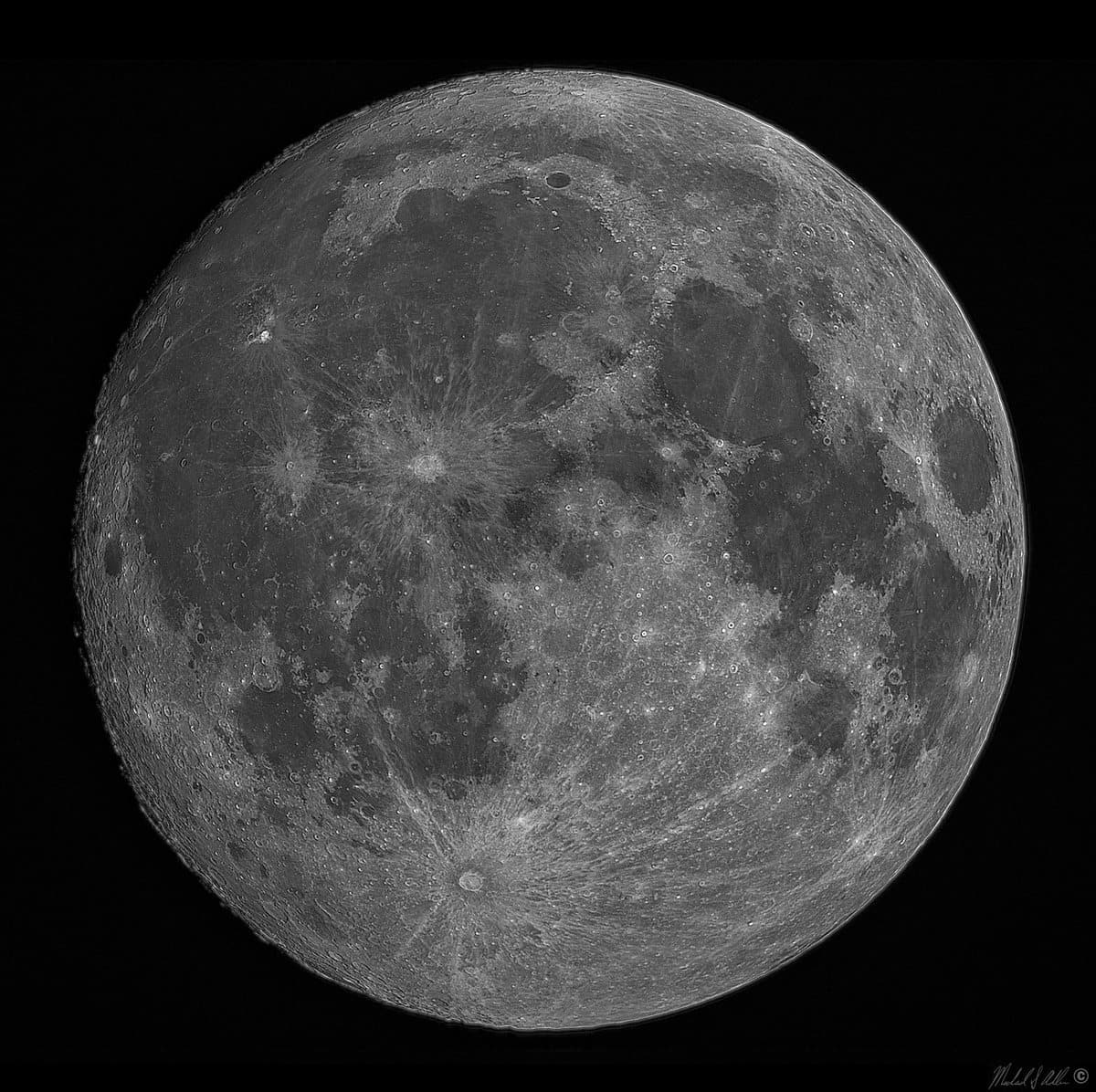
Night of Feb 20, 2027 · penumbral (no dark umbra) · greatest at 23:13 UTC · best from Europe, Africa, western Asia · naked-eye safe.
The next lunar eclipse after the deep partial of August 2026 is a quiet one. On the night of February 20, 2027 the full Moon crosses only Earth's pale outer shadow — the penumbra — and misses the dark central umbra entirely. There will be no dark bite crawling across the disc and no red glow this time: the honest headline is a subtle dimming of the Moon, deepest at 23:13 UTC, that rewards knowing when to look.
When to look (by time zone)
The whole eclipse runs about four hours from first to last contact. Greatest eclipse — the moment of deepest shading — is the one to step outside for.
| Your time zone | Shading begins | Greatest (deepest) | Shading ends |
|---|---|---|---|
| US Eastern (EST) | 4:12 PM Feb 20 | 6:13 PM Feb 20 | 8:14 PM Feb 20 |
| US Central (CST) | 3:12 PM Feb 20 | 5:13 PM Feb 20 | 7:14 PM Feb 20 |
| US Mountain (MST) | 2:12 PM Feb 20 | 4:13 PM Feb 20 | 6:14 PM Feb 20 |
| US Pacific (PST) | 1:12 PM Feb 20 | 3:13 PM Feb 20 | 5:14 PM Feb 20 |
| UK (GMT) | 9:12 PM Feb 20 | 11:13 PM Feb 20 | 1:14 AM Feb 21 |
| Central Europe (CET) | 10:12 PM Feb 20 | 12:13 AM Feb 21 | 2:14 AM Feb 21 |
Times are local clock time — standard (winter) zones in the northern hemisphere. The Moon must be above the horizon: Europe, Africa and western Asia catch the whole eclipse with the Moon riding high; the eastern Americas see it in the early evening after moonrise; from the US West Coast the Moon is still below the horizon near greatest and rises only as the shading fades.
What you'll actually see
A penumbral eclipse is a shading event, not a shadow event. Instead of a crisp dark curve eating the Moon, the penumbra produces a soft gradient: the side of the Moon deepest in the outer shadow looks slightly smudged, muted, a touch amber-grey against the stars. Eyes alone can pick it up near greatest eclipse — especially with the before-and-after comparison — and binoculars make the dimming easier to judge. Photographers catch it well: a mid-eclipse frame against an evening frame from an hour earlier shows the difference plainly.
Safe to watch — like every lunar eclipse
No glasses, no filters, no precautions of any kind: you are simply looking at a full Moon in Earth's outer shadow. Watch for minutes or the full four hours; step out at greatest for the deepest shading and you've caught the next lunar eclipse on Earth.
Frequently asked
When is the next lunar eclipse?
February 20, 2027 — a penumbral eclipse, deepest at 23:13 UTC (6:13 PM EST that evening). Two more penumbrals follow in 2027, on July 18 and August 17. The next eclipse with a dark, visible bite — a partial — is January 12, 2028, and the next total "blood moon" is December 31, 2028.
Will the Moon look different on February 20, 2027?
Slightly, and only if you know to look. The Moon crosses Earth's pale outer shadow — the penumbra — and never touches the dark central umbra, so there is no dark bite and no red. What you get is a subtle dimming across the lunar disc, deepest at greatest eclipse; before-and-during photos show it plainly, but many viewers can't tell without the comparison.
Where can I see the February 2027 lunar eclipse?
Anywhere the Moon is above the horizon during the eclipse — that's the geometry gift of lunar eclipses. Europe, Africa and western Asia are best placed, with the Moon high in the late-evening sky; the eastern Americas catch it in the early evening of February 20; the western US largely misses the deepest shading because the Moon rises late there.
When is the next total lunar eclipse — a real blood moon?
December 31, 2028. The full Moon slides completely into Earth's dark umbra, with greatest eclipse at 16:52 UTC and totality lasting about 72 minutes (roughly 16:16 to 17:28 UTC). Europe and Africa get it high in the evening sky; the Americas see the Moon setting in the west that morning. Totals follow again on June 26, 2029 and December 20, 2029.
More to see
Sources and review
- Eclipse contact times: Espenak / EclipseWise, reproduced with Astronomy Engine 2.1.19
- Moon phases and illumination: U.S. Naval Observatory
- Cloud forecast: MET Norway — CC BY 4.0
Last reviewed by the Stargazr editorial team. Astronomical forecasts and meteor maxima are revised as primary sources publish; we update this page when they do. Found an error? corrections@stargazr.io
All lunar eclipses · The Aug 2026 deep partial (just passed) · Tonight's sky →