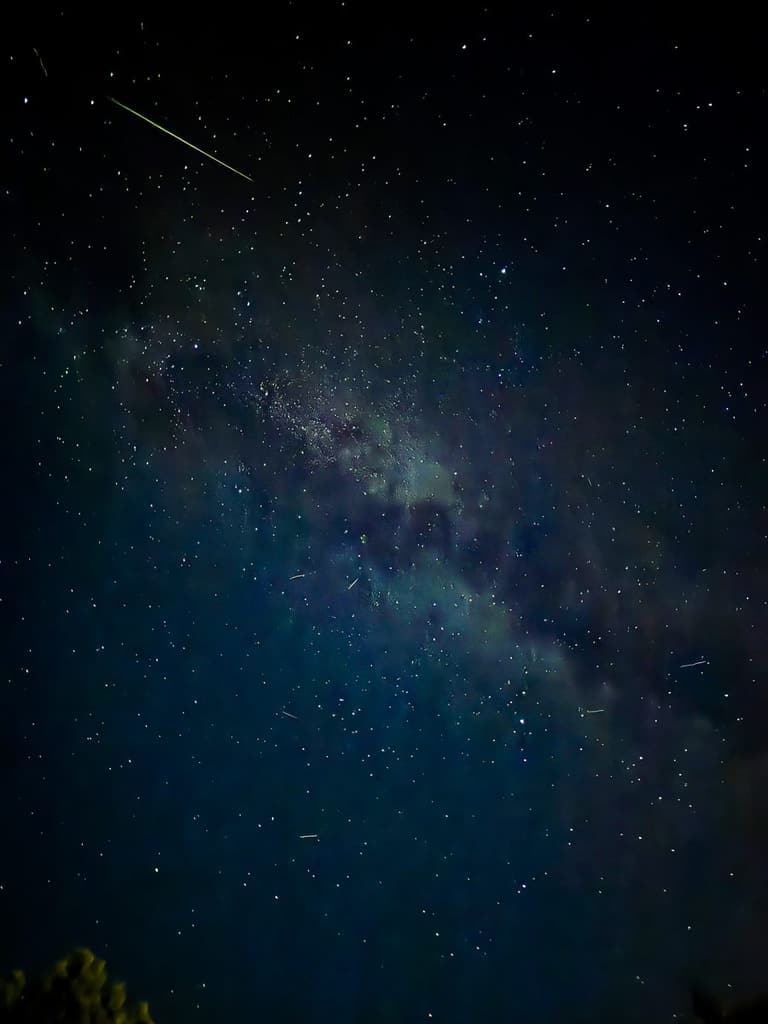
Peaks around July 30 each year · up to ~25/hr at its best · medium-paced (41 km/s) · best from the southern hemisphere and the tropics.
The Southern Delta Aquariids are a steady, medium-paced shower that rewards southern-hemisphere and tropical observers with a long, reliable display through the heart of summer. They peak around July 30 each year, but unlike showers with a sharp spike, they hold near their best for days — making the whole last week of July and first week of August worth watching. They're quieter than the Perseids, but they overlap neatly, and the two showers together can make for a surprisingly busy night.
When to watch
The shower is active from around July 12 to August 23 each year, building to a broad peak around July 30. There's no single best hour stamped on every location — the radiant climbs higher as the night progresses from where you are, so the later the better, especially in the hours before dawn when Earth is turning into the stream. The broad plateau means you have plenty of nights to try, not just one.
Where to look
The meteors appear to stream from the constellation Aquarius, but they can flash anywhere across the sky. Don't stare at the radiant — pick a wide, dark stretch of sky away from it and take in as much of the dome as you can.
What makes it special
The Southern Delta Aquariids are thought to come from comet 96P/Machholz. At 41 km/s they're medium-paced — not the blazing streaks of the Perseids, but steady and dependable, with meteors that tend to be long and smooth. The ideal zenithal hourly rate is around 25 under a perfectly dark sky with the radiant directly overhead; most observers see fewer.
How to watch
No telescope or binoculars needed — they only shrink your view. Give your eyes at least 20 minutes to dark-adapt, get as far from city lights as you can, and find a spot with a wide, open southern horizon. Southern-hemisphere and tropical observers have the best seat; higher northern latitudes will see the radiant lower and rates will be noticeably reduced.
Frequently asked
When do the Southern Delta Aquariids peak?
Around July 30 every year, with the shower active from roughly July 12 to August 23. The peak is unusually broad, so there's no single must-watch night — a stretch of clear evenings around the peak gives you a good chance of catching it well.
How many Southern Delta Aquariids will I actually see?
The ideal rate is around 25 meteors per hour under a perfectly dark sky with the radiant directly overhead. From a real backyard — some light pollution, the radiant not at its highest — expect noticeably fewer. Southern-hemisphere and tropical observers get the best rates; from mid-northern latitudes the radiant never climbs high and real counts drop further.
What causes the Southern Delta Aquariids?
The shower is most likely debris from comet 96P/Machholz. Each year Earth crosses that debris stream in late July and early August, and the dust grains burn up high in the atmosphere as meteors that appear to radiate from the constellation Aquarius.
Other meteor showers
Quadrantids · Lyrids · Eta Aquariids · Perseids · Orionids · Leonids · Geminids · Ursids