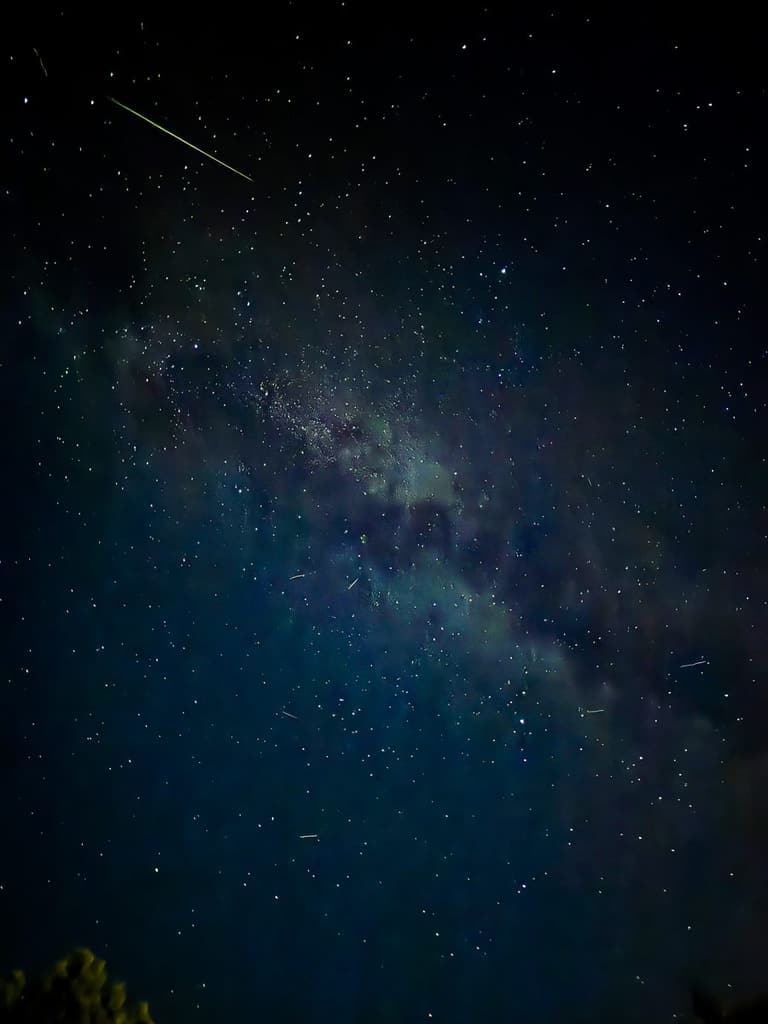
Peaks around August 12 each year · up to ~100/hr at its best · fast (59 km/s) · best from the northern hemisphere.
The Perseids are the most-watched meteor shower of the year, and for good reason: they peak in warm August nights, throw fast, bright meteors, and reward anyone willing to lie back and look up. Under a dark sky at the peak, the ideal rate is around 100 meteors an hour.
When to watch
Activity runs from mid-July to late August each year, building to a peak around August 12. Like most showers, the Perseids are best in the dark hours after midnight, when the radiant has climbed high and your side of Earth is turning into the stream — so the pre-dawn hours usually show the most.
Where to look
The meteors stream out of the constellation Perseus, low in the northeast in the late evening, but they can flash anywhere in the sky. Don't stare at the radiant — face a dark, open patch of sky and take in as much of it as you can.
What makes it special
The Perseids are debris from comet Swift–Tuttle, and at 59 km/s they hit the atmosphere fast — quick, bright streaks, with the occasional dazzling fireball that leaves a glowing train. The ~100-per-hour figure is the ideal zenithal rate under perfect dark skies; most people see fewer.
How to watch
No telescope or binoculars — they only narrow your view. Get away from city lights, give your eyes at least 20 minutes to adapt to the dark, and settle in with a reclining chair or blanket. Patience does more than any equipment.
Frequently asked
When do the Perseids peak?
Around August 12 every year, with good activity for several nights either side. They're active from roughly July 17 to August 24.
How many Perseids will I actually see?
The headline rate of about 100 an hour is the ideal under a perfectly dark sky with the radiant overhead. From a real backyard — some light pollution, the radiant not yet high — expect more like a few dozen an hour at the peak, fewer near the edges of the window.
Where do the Perseids come from?
They're tiny grains shed by comet Swift–Tuttle. Each August, Earth plows through that debris trail, and the grains burn up high in the atmosphere as meteors that seem to radiate from the constellation Perseus.
Other meteor showers
Quadrantids · Lyrids · Eta Aquariids · Southern Delta Aquariids · Orionids · Leonids · Geminids · Ursids