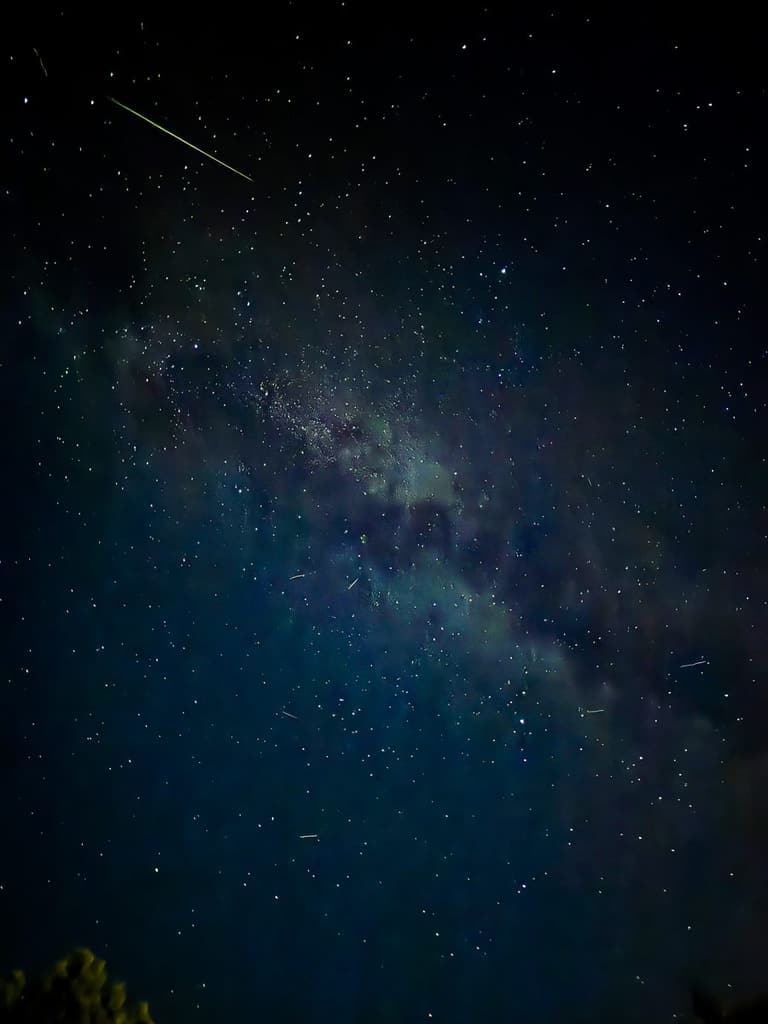
Peaks around October 21 each year · up to ~20/hr at its best · very fast (66 km/s) · best from both hemispheres.
The Orionids are one of autumn’s fastest showers, flinging meteors across the sky at a blazing 66 km/s — debris shed by the most famous comet in history, Halley's Comet. They peak around October 21 each year and are one of the rare showers equally well placed for watchers in the northern and southern hemispheres. Under a dark sky at the peak, the ideal rate is around 20 meteors an hour.
When to watch
The Orionids are active from early October through early November each year, with the peak around October 21. The radiant climbs well up in the sky by midnight, so the hours between midnight and dawn are your best window — the later you stay up, the more meteors you're likely to catch.
Where to look
The meteors appear to stream from the constellation Orion, but they can flash anywhere across the sky. Don't stare at the radiant — pick a wide, dark patch of sky a good distance from Orion and let your gaze drift; that's where you'll catch the long, bright streaks at their best.
What makes it special
The Orionids are debris from comet Halley, and at 66 km/s they're among the fastest meteors of any annual shower. That speed means quick, incandescent streaks that frequently leave glowing persistent trains lingering for a second or two after the meteor is gone. The ~20-per-hour figure is the ideal zenithal rate under a perfectly dark sky with the radiant overhead; real counts will be lower.
How to watch
No telescope or binoculars — wide-open eyes take in far more sky than any lens. Give yourself at least 20 minutes to dark-adapt, get as far from city lights as you can, and lie back so you can see as much of the sky as possible. The Orionids reward patience more than equipment.
Frequently asked
When do the Orionids peak?
Around October 21 every year, with activity running from roughly October 2 to November 7. Rates build gradually toward the peak and taper off afterward, so the few nights on either side of the 21st are well worth watching.
How many Orionids will I actually see?
The headline figure of about 20 per hour is the ideal under a perfectly dark sky with the radiant directly overhead. From a typical backyard with some light pollution and the radiant at a modest angle, expect more like 10 to 15 an hour at best — but the meteors are fast, bright, and often leave lingering trains, so quality makes up for quantity.
What causes the Orionids?
They're tiny grains shed by Halley's Comet over its many passes through the inner solar system. Earth crosses that debris stream every October, and the grains burn up high in the atmosphere as meteors that appear to radiate from the constellation Orion.
Other meteor showers
Quadrantids · Lyrids · Eta Aquariids · Southern Delta Aquariids · Perseids · Leonids · Geminids · Ursids